Many households start looking into reverse osmosis for a simple reason: they want the water they drink and cook with to taste cleaner. Others have a specific concern, such as a result from a water test, or a family member who is sensitive to certain contaminants.
Whatever brought you here, understanding how a system works makes it much easier to judge what it can and cannot do. This guide on Gaithersburg reverse osmosis explains the technology, the parts involved and the questions to ask before a system is installed.
How reverse osmosis works
Reverse osmosis forces water under pressure through a semi-permeable membrane with extremely small pores. Water molecules pass through, and many dissolved substances do not. The rejected material is carried away in a stream of wastewater that goes down the drain, while the purified water flows to a storage tank and then to a dedicated faucet.
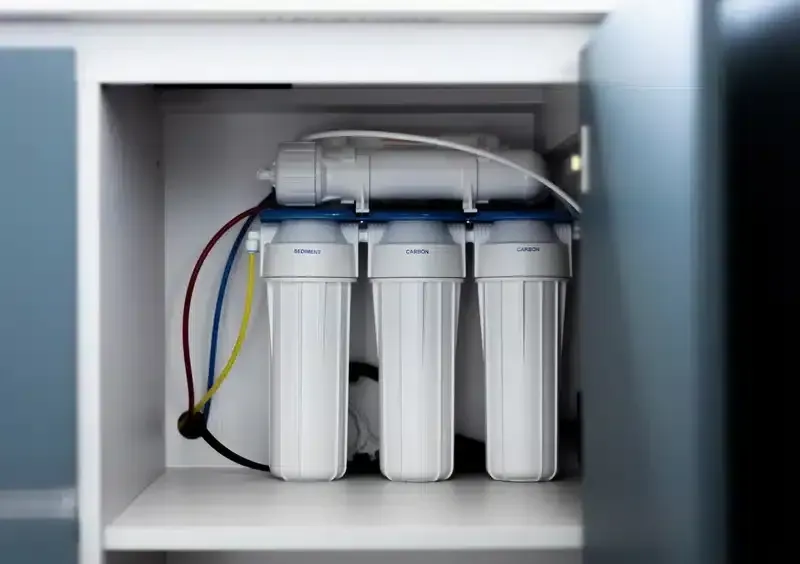
Because the membrane is so fine, most systems include pre-filters to protect it. A sediment filter removes particles, and a carbon filter reduces chlorine and some organic compounds that would otherwise damage the membrane. Many systems add a post-filter to polish the water before it reaches the faucet.
The parts of a typical under-sink system
- Sediment pre-filter. Catches sand, rust and silt.
- Carbon pre-filter. Reduces chlorine and some taste and odor compounds.
- RO membrane. The heart of the system, where most dissolved solids are rejected.
- Storage tank. Holds treated water so it is available quickly.
- Post-filter. A final carbon stage that improves taste.
- Dedicated faucet. A small tap, usually at the sink, that dispenses the treated water.
- Drain connection. Carries the rejected water away.
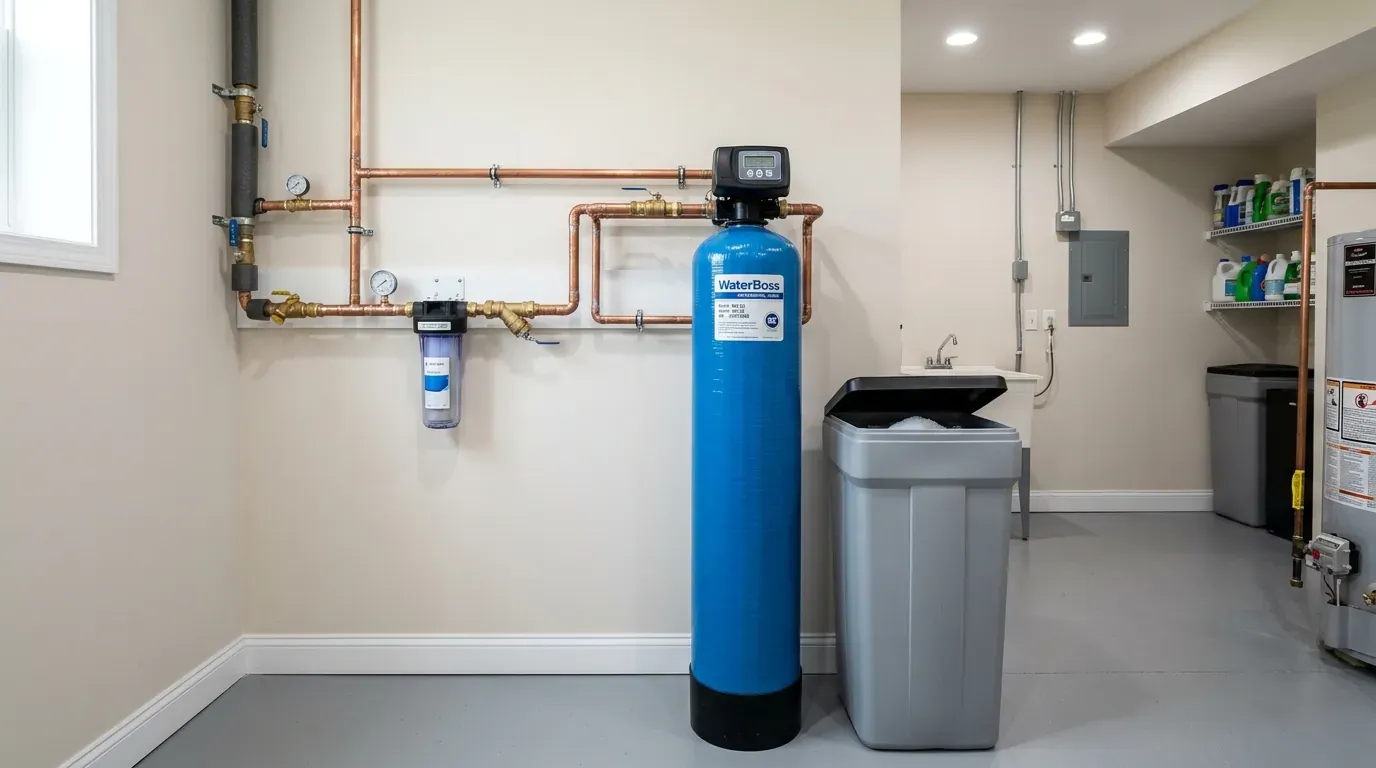
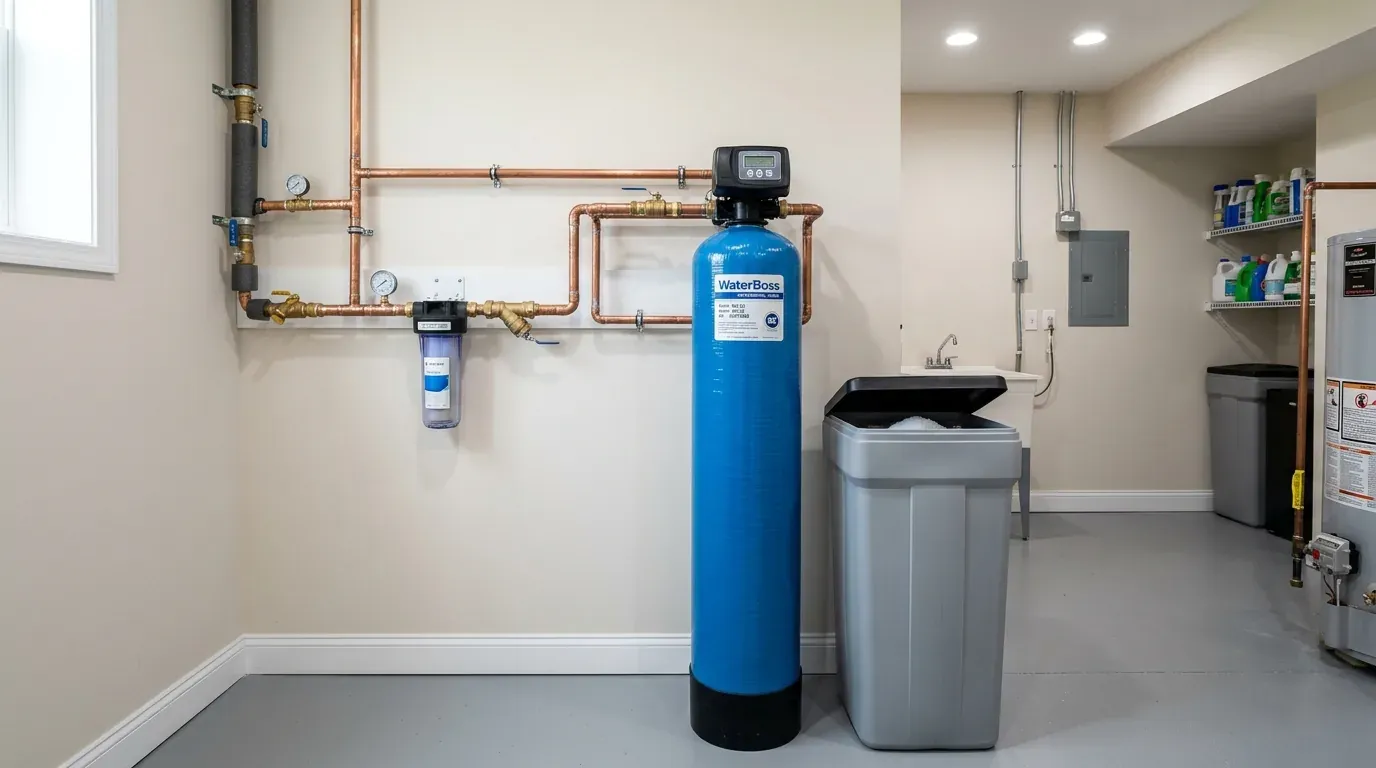
Whole-home and commercial systems use larger versions of the same principle. The reverse osmosis systems page from Mallick Plumbing & Heating describes the options.
What reverse osmosis can and cannot do
Reverse osmosis reduces many dissolved substances, and the specific reduction depends on the membrane and the system design. It is not a cure for every water problem. A system will not soften all of the water in a house, and it will not address a problem such as low pressure.
Because it removes minerals along with other dissolved material, many people notice that the water tastes different. For questions about specific contaminants, the right starting point is a water test and the manufacturer’s performance data.
Wondering whether it fits your home? Call Mallick Plumbing & Heating at (301) 804-6759.
Start with a water test
The best way to choose a treatment system is to know what is in your water. A test identifies hardness, pH and certain contaminants, and it shows which of them you actually need to address. Our water testing page explains how testing works. The EPA’s overview of drinking water is a good general reference, and it explains how public water systems are regulated.
If a test shows a result that concerns you, speak with a qualified professional and your local health authority before deciding what to do.
Gaithersburg reverse osmosis, what installation involves
A typical under-sink installation takes a few hours. The plumber chooses a location for the tank and filters, mounts the components, connects the water supply, installs the dedicated faucet and adds a drain connection. After the system is filled and flushed, they check for leaks and verify the pressure in the tank. They should explain the filter change schedule and show you how to shut off the supply to the unit.
A scenario, the family that cooks with tap water
Picture a household that drinks filtered water from a pitcher but notices that coffee and soup still taste flat or chalky. A water test shows a high level of dissolved minerals, and the family decides that an under-sink system suits their needs because most of their drinking and cooking happens at one sink.
The plumber installs the unit, and the family keeps the pitcher for guests. The lesson is that the right system depends on how the water is used, not only on what is in it.
Questions to ask before you buy
A short list of questions helps you compare systems and installers. Ask which contaminants the system is certified to reduce, and by what standard that performance was verified. Ask how much wastewater the unit sends to the drain for every gallon of treated water, because efficiency varies between designs. Ask how often the filters and the membrane need to be replaced and how you will know when it is time.
Ask where the storage tank and the dedicated faucet will go, and whether the installation will require changes to your cabinets or countertop. Clear answers let you choose a system that matches how your household actually uses its water.
Maintenance matters too, and the reason is mechanical. As the membrane filters water, rejected material concentrates on its surface and is carried to the drain, but over time some of it builds up as scale or fouling in the pores, which lowers output and the quality of the treated water.
Chlorine that slips past a worn carbon filter oxidizes the membrane material and shortens its life. A worn filter or a fouled membrane is also the usual reason a tank stops filling or the faucet flows slowly.
Filters and membranes wear out and need replacement on a schedule. A neglected pre-filter can allow chlorine to damage the membrane, and a clogged filter reduces flow. Keep a record of change dates and follow the manufacturer’s schedule. Look at the unit for leaks from time to time, and note any change in taste or flow, which can signal that a filter needs attention. Manufacturer specifications and a current water test are the practical references for how a treatment technology performs.
Talk to Mallick Plumbing & Heating about reverse osmosis in Gaithersburg
If you are weighing a system, a conversation is the best next step. Call Mallick Plumbing & Heating at (301) 804-6759 to talk through your options.